
- Posts: 68
- Thank you received: 31
 Nebulizer
- mary
-
 Topic Author
- Offline
- Senior Member
-

Less
More
25 Aug 2014 16:11 #47086
by mary
Nebulizer was created by mary
Has anyone used activated MMS in a nebulizer ? and any results ?
Please Log in or Create an account to join the conversation.
- fourfingerz
-
- Offline
- User is blocked
-

- I'm rooting for you - we're all in this together
Less
More
- Posts: 544
- Thank you received: 558
25 Aug 2014 17:11 #47088
by fourfingerz
From Jim's latest book: • The Master Mineral Solution of the 3rd Millennium
jhbooks.org/
(I get the e-book as it is easily "searched" for specific information)
" Using a Misting Machine
Another and much safer procedure is to use a mister, a machine
that creates a mist of water. Some humidifiers also create a cool
mist; read your user’s manual. I use 24 drops of activated MMS for
each cup of water that I put in the mister. MMS will be in the mist.
Use bottled drinking water. Keep a large bottle so that you can pour
the liquid out of the machine and into a bottle with a lid. In that way,
after you have taken your breaths, you can continue to use the same
MMS until it gets used up.
Make up a batch for your machine. You will probably need at least
three cups. Remember: 24 drops of activated MMS per cup. Turn
the machine on and put your mouth right down at the opening where
the mist comes out. You will be able to tell when the mist starts as
the air will get cold on your lips. At that time, the first time, take only
one breath. Then 4 hours later you can do it again and if everything
went alright and there was no problem, you can take 2 breaths. Do
it two or three times a day ..."
Martin
Replied by fourfingerz on topic Nebulizer
mary wrote: Has anyone used activated MMS in a nebulizer ? and any results ?
From Jim's latest book: • The Master Mineral Solution of the 3rd Millennium
jhbooks.org/
(I get the e-book as it is easily "searched" for specific information)
" Using a Misting Machine
Another and much safer procedure is to use a mister, a machine
that creates a mist of water. Some humidifiers also create a cool
mist; read your user’s manual. I use 24 drops of activated MMS for
each cup of water that I put in the mister. MMS will be in the mist.
Use bottled drinking water. Keep a large bottle so that you can pour
the liquid out of the machine and into a bottle with a lid. In that way,
after you have taken your breaths, you can continue to use the same
MMS until it gets used up.
Make up a batch for your machine. You will probably need at least
three cups. Remember: 24 drops of activated MMS per cup. Turn
the machine on and put your mouth right down at the opening where
the mist comes out. You will be able to tell when the mist starts as
the air will get cold on your lips. At that time, the first time, take only
one breath. Then 4 hours later you can do it again and if everything
went alright and there was no problem, you can take 2 breaths. Do
it two or three times a day ..."
Martin
The following user(s) said Thank You: mary, Health Friend
Please Log in or Create an account to join the conversation.
- mary
-
Topic Author
- Offline
- Senior Member
-
Less
More
- Posts: 68
- Thank you received: 31
25 Aug 2014 18:02 #47089
by mary
Replied by mary on topic Nebulizer
Thank you for the info. I do have the mister .. but have been using MMS in a nebulizer .. I have been activating 3 drops and using a portion of that in the little cup and breathing the mist. Not sure if it is too strong or not strong enough... I guess you just have to experiment with this stuff.
Please Log in or Create an account to join the conversation.
- Semenov
-

- Offline
- New Member
-

01 Jul 2016 06:46 - 01 Jul 2016 07:11 #52643
by Semenov
Replied by Semenov on topic Nebulizer
It depends on the cup size (camera) of your nebulizer (mister). Average size of the chamber for the drug solution 10 ml. Therefore if book offers a dosage to 24 drops per cup, it turns out one activated drop on full cup misters 10 ml.
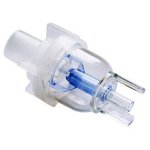 The volume of this cup: 13 ml
Last edit: 01 Jul 2016 07:11 by Semenov.
The following user(s) said Thank You: markbutler416@protonmail.com
Please Log in or Create an account to join the conversation.
Time to create page: 0.368 seconds
The MMS HEALTH RECOVERY GUIDEBOOK is Jim’s latest book. It provides the latest information on how to safely use MMS. Click the book image to order your copy today.
Jim's Blog
-
How does MMS affect bacteria in the body?
Published on: July 24, 2026
First facts, MMS does not kill friendly bacteria. What is the difference in useful bacteria and the harmful stuff? Well the feces of the useful bacteria is not poisonous and the feces of the harmful bacteria is poisonous and that is what makes one sick and causes the problems. Poisons have long chains of atoms …
-
MMS/CD and Plastics
Published on: July 12, 2026
Question: How does MMS interact with various plastics? Jim: In regards to your question about plastics, we really cannot give you a “sure bet” answer. This is because the world of plastics is vast, and like so many things in our environment, it’s difficult to know what is really what. To give you an idea, …
-
MMS/CD, Bacteria and Viruses
Published on: July 5, 2026
Question: Does MMS/CD kill bacteria and virus? Jim: Antibacterial drugs can sometimes stop bacterial [infections] diseases but medicine has yet to develop anything to stop viral infections. Thankfully, MMS/CD has been known to stop both viral and bacterial diseases. For either viral or bacterial infections, begin with the Starting Procedure and continue following the Health …
-
Importance of Following the Plan
Published on: June 27, 2026
Every week at least one new person approaches me with the question will MMS/CD help overcome some new disease. MMS/CD is an oxidizer that fits into the operation of the body in the exact right chemical balance to kill diseases and their poisons and eradicate heavy metals. Drugs must somehow attack the nucleus of the …
-
More is Not Always Better
Published on: June 9, 2026
In my books, there are times when one might need to take larger doses of MMS/CD. In Protocol 2000, for example you’ll find maximum dosage amounts. Some might take this to mean the more MMS one takes the better. But this is NOT necessarily so! More is not necessarily better, you need to listen to …
-
Nutritional Research Information
Published on: May 27, 2026
Note: The following was written by Jim around 2012, and we are putting it here as food for thought. The subject of “nutrition” in the world today, is quite subjective, with a wide range of factors weighing into this equation, such as how the food is grown, handled, stored, processed, etc. etc. In addition, we …